

Picture yourself touring two Phoenix homes.
The first has the kitchen you've been saving on Pinterest for years: a huge island, new cabinets, beautiful countertops, and modern appliances.
The second kitchen isn't quite as impressive.
But then you open the back door.
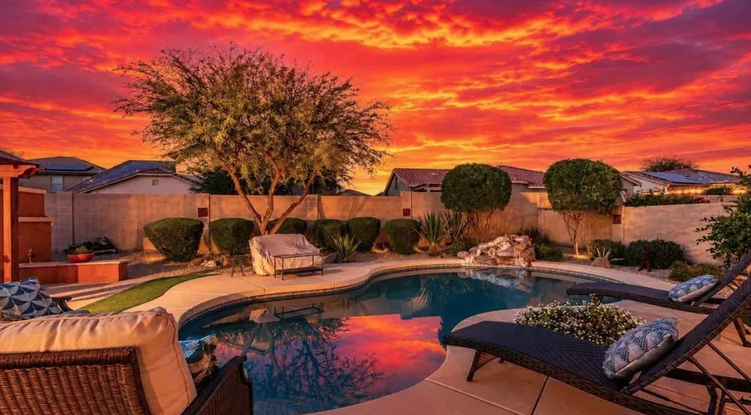
There's a covered patio, mature desert landscaping, a shaded seating area, mountain views in the distance, and a backyard you can actually imagine using.
Suddenly, the decision gets harder.
When buying a home in Phoenix, it's easy to spend most of a showing studying kitchens, bathrooms, bedrooms, and flooring.
But in the Valley of the Sun, your backyard deserves some serious attention too.
A beautiful outdoor space can become an extension of your home. A poorly planned one may leave you wondering why you never use it.
Here are the details Phoenix buyers shouldn't overlook.
In Phoenix, a Backyard Is More Than Extra Square Footage
Phoenix's desert setting makes outdoor living a major part of how many homeowners think about their properties.
A backyard might include a covered patio, pool, outdoor kitchen, fire feature, desert garden, artificial turf, play area, or simply a comfortable place to enjoy an Arizona evening.
But there's a difference between a backyard that looks good and one that works well.
That's what buyers need to determine during a showing.
Before you start imagining patio furniture, ask yourself:
When would I actually use this space?
Morning?
Afternoon?
Evening?
Would you entertain there? Swim? Let children play? Let a dog outside? Garden? Eat dinner?
Your answer can completely change which backyard features matter most.
1. Find Out Where the Afternoon Sun Hits
This is one of those details that's easy to overlook during a morning home tour.
The backyard feels comfortable.
The patio is pleasant.
Then imagine returning several hours later.
Where is the sun?
Phoenix's climate makes the orientation of outdoor areas worth considering.
A west-facing backyard can provide beautiful sunsets, but it may also receive substantial afternoon sunlight. Other orientations create different patterns of sun and shade throughout the day.
There's no universally "bad" direction.
It depends on how you plan to use the property.
If outdoor dinners are part of your dream, consider what the patio might feel like in the late afternoon.
If you're an early riser who wants coffee outside, your priorities may be different.
Don't simply ask whether the backyard gets sun.
Ask when.
2. Shade Might Be More Valuable Than You Think
A large patio isn't necessarily a useful patio.
Look up.
Is it covered?
How far does the cover extend?
Does it actually shade the seating area at the times you're likely to use it?
Shade can come from several sources, including covered patios, pergolas, mature trees, umbrellas, and strategically designed structures.
When touring a Phoenix property, look at the relationship between the house and the backyard.
A smaller, thoughtfully shaded outdoor area may be more useful to you than a huge exposed yard.
This is also where orientation matters.
The best way to understand the outdoor space is to think beyond the exact time of your showing.
3. That Sparkling Pool Comes With Responsibilities
Few things photograph better in a Phoenix real estate listing than a backyard pool.
Blue water. Desert landscaping. Maybe a couple of palm trees.
It looks fantastic.
But don't stop at the listing photo.
If you're considering a pool home, investigate the pool as part of the property.
Ask about the condition and available maintenance history of components such as the pump, filter, heater if present, pool surface, decking, lighting, and other equipment.
Find out what your general home inspection covers and whether a separate pool evaluation would be appropriate.
Then think about your lifestyle.
Will you actually use the pool?
Are you comfortable with maintenance?
Would you hire a pool service?
Do you want that much of the backyard dedicated to swimming?
A pool can be an excellent feature for the right homeowner.
For someone else, it can be a responsibility they didn't really need.
4. Desert Landscaping Doesn't Mean No Maintenance
A Phoenix yard filled with gravel, cacti, desert-adapted plants, and a few trees may look almost maintenance-free.
Almost.
Desert landscaping still requires attention.
Irrigation components can leak or fail. Plants grow. Trees need care. Weeds appear. Gravel moves. Hardscape ages.
When touring the backyard, look closely at the landscaping rather than treating it as decoration.
Are the plants healthy?
Where are irrigation lines?
Are there mature trees close to the house?
Does water appear to drain appropriately?
Are there plants or features you'd want to remove or replace?
Phoenix promotes water conservation and desert-appropriate landscaping, so buyers who are unfamiliar with Arizona should learn about local watering practices and conservation resources through the City of Phoenix.
A desert yard can be beautiful and practical.
It just isn't maintenance-free.
5. Mature Trees Can Completely Change a Backyard
Here's a feature buyers may not appreciate until they tour several Phoenix properties:
Mature shade can be difficult to replicate quickly.
A large established tree may create a completely different outdoor experience from a newly landscaped yard with small plants.
But mature trees deserve inspection too.
Consider their condition, placement, roots, irrigation needs, proximity to structures, and ongoing maintenance.
A tree positioned perfectly over a patio can be an incredible feature.
One growing too close to a structure or creating maintenance issues is a different story.
Don't assume "mature landscaping" is automatically positive or negative.
Understand what you're inheriting.
6. Look at the Backyard From Inside the House
This is a simple trick that can completely change how you evaluate a home.
Stand in the kitchen.
Now look outside.
Do the main living areas connect naturally to the backyard?
Can you see the pool from inside?
Does the patio feel like an extension of the living room?
Where is the door?
Would carrying food outside for dinner be convenient?
Some homes have fantastic yards that feel disconnected from the interior.
Others use windows, doors, and floor plans to make the outdoor space feel like another room.
If outdoor living matters to you, the relationship between inside and outside can be just as important as the backyard itself.
7. Privacy Can Be Easy to Miss in Listing Photos
Real estate photography is very good at showing a backyard's best angle.
That's why buyers need to stand in the middle of the yard and look around.
Can neighboring homes see directly into the space?
Are there second-story windows overlooking the pool?
What's behind the property?
Is there a road nearby?
Are there utility structures or commercial buildings visible?
Walls and landscaping may provide privacy, but don't assume you can simply change them later.
HOA requirements and applicable local rules can affect walls, landscaping, exterior structures, and other modifications.
If privacy is important, evaluate what exists today.
8. What Is Beyond the Backyard Wall?
That open desert behind the house might be one of your favorite features.
Investigate it.
Vacant land isn't necessarily permanent open space.
If the lack of development behind a property is influencing your decision, find out what you reasonably can about the surrounding parcels and applicable planning information.
Could development occur there?
Is it designated open space?
Are roads or other projects planned nearby?
What does current zoning allow?
The same principle applies to mountain views.
A beautiful view from the patio is a wonderful feature, but buyers shouldn't assume every existing sightline is legally protected.
If the surroundings matter enough to influence what you're willing to pay, make them part of your due diligence.
9. Don't Forget About Drainage
Phoenix is in the Sonoran Desert.
So why worry about water?
Because desert storms can produce intense rainfall.
The National Weather Service Phoenix provides information about Arizona's monsoon weather and associated hazards.
For a home buyer, the practical lesson is simple: look at drainage.
Where does water go when it rains?
How is the lot graded?
Are there obvious low spots?
Do downspouts discharge appropriately?
Are there washes or drainage features nearby?
If you have concerns about flood risk for a specific property, use current official information and appropriate insurance or real estate professionals rather than relying on assumptions.
A backyard can look completely different during a heavy storm than it does during a sunny showing.
10. Bigger Isn't Always Better
Imagine choosing between two Phoenix backyards.
One is enormous but mostly exposed dirt or gravel.
The other is considerably smaller but has a covered patio, thoughtful landscaping, privacy, and an outdoor area you'd use every day.
Which is better?
Square footage doesn't answer that question.
Think about usable space.
A giant yard might be perfect if you want room for specific activities and have confirmed they're permitted.
Someone who prefers low-maintenance living may find the smaller backyard far more appealing.
Don't pay for outdoor space simply because there's a lot of it.
Pay attention to whether that space fits your life.
11. Ask Yourself What the Backyard Will Cost After Closing
Buyers naturally focus on the purchase price and mortgage.
But outdoor spaces can create additional expenses.
Depending on the property, those could involve:
- Pool maintenance
- Landscaping
- Irrigation
- Tree care
- Outdoor lighting
- Patio maintenance
- Water
- Electricity
- Pest management
- Repairs to walls or hardscaping
This doesn't mean you should avoid a feature-rich backyard.
It means those features should be part of your ownership budget.
A pool, mature landscape, and outdoor kitchen may be exactly what you want.
Just make sure you want the responsibilities too.
12. Don't Buy the Staging
Outdoor staging can be incredibly persuasive.
The string lights are on.
The cushions perfectly match.
There's a fire feature glowing beside a beautiful seating area.
Maybe there's even a pitcher of lemonade on the table.
Now mentally remove everything that doesn't come with the house.
What's left?
Is there enough shade?
Is the hardscape in good condition?
Is the layout useful?
Do you like the landscaping?
Does the yard offer enough privacy?
How much work will it require?
Would you still love it without the furniture?
That's the backyard you're actually buying.
The Phoenix Backyard Test
Before leaving a home you're seriously considering, spend five extra minutes outside.
Don't talk.
Just look and listen.
Notice the sun.
Look toward neighboring properties.
Check the shade.
Walk the perimeter.
Look at the landscaping.
Listen for traffic.
Look back toward the house.
Then ask yourself:
Can I picture an ordinary day here—not just a housewarming party?
That's a much better test than whether the backyard photographs well.
FAQs About Phoenix Homes and Backyards
Is a backyard important when buying a home in Phoenix?
It can be, particularly for buyers who expect to spend significant time outdoors. Shade, orientation, privacy, landscaping, pools, maintenance requirements, and the connection between indoor and outdoor spaces can all affect how useful a backyard is.
Is a west-facing backyard bad in Phoenix?
Not necessarily. A west-facing outdoor area may receive substantial afternoon sunlight but can also appeal to buyers who enjoy sunsets. Consider shade, patio design, windows, landscaping, and how you expect to use the space rather than judging orientation alone.
Is a pool worth having in Phoenix?
A pool can be worthwhile for homeowners who use it frequently and are comfortable with its maintenance and operating responsibilities. Buyers should evaluate the specific pool's condition and consider how much backyard space it occupies.
Is desert landscaping maintenance-free?
No. Desert landscaping may have different maintenance requirements than a traditional lawn, but plants, trees, irrigation, weeds, gravel, and hardscape still require attention.
What should I check in a Phoenix backyard before buying?
Check sun exposure, shade, drainage, landscaping, irrigation, walls, privacy, neighboring properties, outdoor structures, pool condition if applicable, and the overall usability of the space.
Should I worry about vacant land behind a Phoenix home?
If the open land is important to your purchasing decision, investigate it. Vacant property may potentially be developed depending on ownership, zoning, plans, restrictions, and other factors. Don't assume today's view will necessarily remain unchanged.
Does backyard direction matter in Phoenix?
It can. Orientation affects when a backyard and the home's windows receive direct sunlight. The ideal direction depends on your preferences, the property's shade features, landscaping, and how you plan to use the outdoor area.
Should I buy a Phoenix house with a large yard?
Only if the space benefits your lifestyle. A smaller, shaded, well-designed yard may be more useful to some buyers than a larger space requiring substantial maintenance. Consider usability rather than size alone.
In Phoenix, Don't Stop Your Home Tour at the Back Door
When buying a home in Phoenix, it's understandable to focus on the interior.
After all, kitchens, bathrooms, floor plans, and bedrooms are major parts of the decision.
But don't treat the backyard as an afterthought.
Walk outside. Look at the sun. Find the shade. Check the landscaping and irrigation. Think about privacy. Investigate what's beyond the wall. Understand the pool if there is one.
Most importantly, picture yourself actually using the space.
The perfect Phoenix backyard doesn't have to be the biggest or most expensive.
It needs to be the one that works for the way you want to live.
And sometimes, that can make it every bit as important as the kitchen.
Check out this article next